Transport amphorae
Mediterranean, 3rd–1st century BCE
Ceramic clay (collected from the sea)
H: 67 cm / H: 80 cm / H: 95 cm
UMP 21600, UMP 21601, UMP 21602
Similar types of amphorae are known from the Greek islands of Kos, Thasos, and Alonissos, and the ancient city of Mende, but also from sunken ship cargos filled with preserved ancient amphorae along the coast of Pag Island in Croatia.
The amphora became a symbol for the extensive international trading activities of antiquity. These clay transport containers primarily served for shipping wines, olive oils, aromatic oils, fish sauces (garum), preserved fruit, as well as precious spices and powdered goods across the seas. The oldest pointed amphorae started to be produced in Greece in the 7th century BCE. Later specimens are more oval or bulbous in shape, with two vertical handles extending from the long neck to the distinctive convex shoulders. Some amphorae are embossed with a stamp bearing the name of the manufacturer or shipper. Tapering to a solid peg toe to improve support, the pointed base allows the amphora to be pushed into sand or soft earth in a storehouse. Most amphora stoppers have not been preserved as they were usually made of wood, cork, or occasionally plaster. (DB)
l amphora
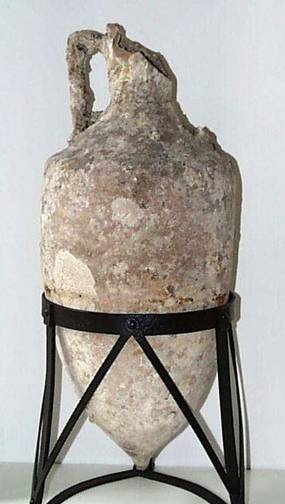
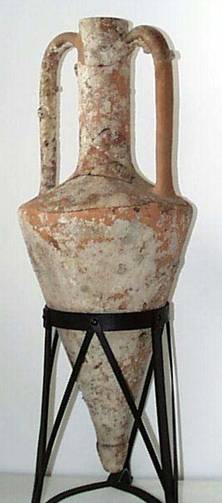
UMP 21601 UMP 21602